
EPA & HHS Take on Microplastics: A Scientist’s Perspective
By Dr. Marcus Eriksen
After 20 years of sailing the world’s oceans to research the global scale of plastic pollution, it’s actually the ocean of micro and nanoplastics within our own bodies that worries me the most. On April 2, 2026, U.S. Secretary of Health and Human Services (HHS) Robert F. Kennedy Jr. and U.S. Environmental Protection Agency (EPA) Administrator Lee Zeldin announced the EPA will now classify microplastics as a “priority contaminant group” in the Contaminant Candidate List, and the HHS will launch a $144 million initiative to investigate their impacts on human health. It's about time.
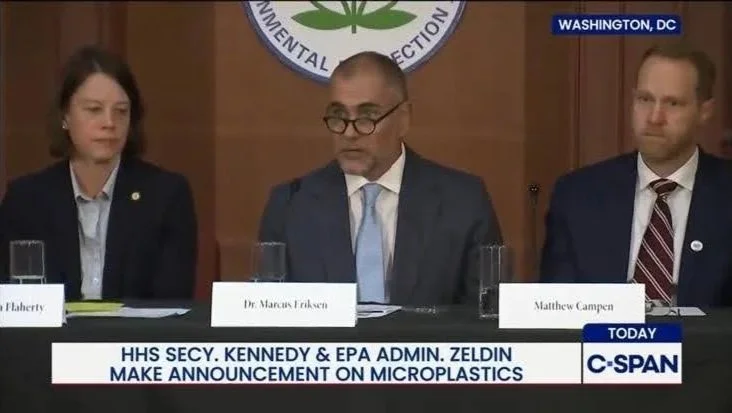
I was one of three scientists invited to join the panel making the announcements. With only five minutes to speak, here’s what I shared:
“Our research on ocean plastics at 5 Gyres provides a global context on the scale of the problem, as well as the alarming 40-year trend showing that microplastic particle counts are skyrocketing. From 1979 to 2019, we witnessed relatively steady levels, followed by exponential rise from 2005 onward, leading to an estimated 170 trillion microplastic particles on the surface of the global ocean. But the issue doesn’t stop there. Other more recent research suggests that about 600 quadrillion (600,000,000,000,000,000) microplastic particles enter the atmosphere every year. It is safe to say that there are more nanoplastics than grains of sand on the beach and stars in the universe… combined.
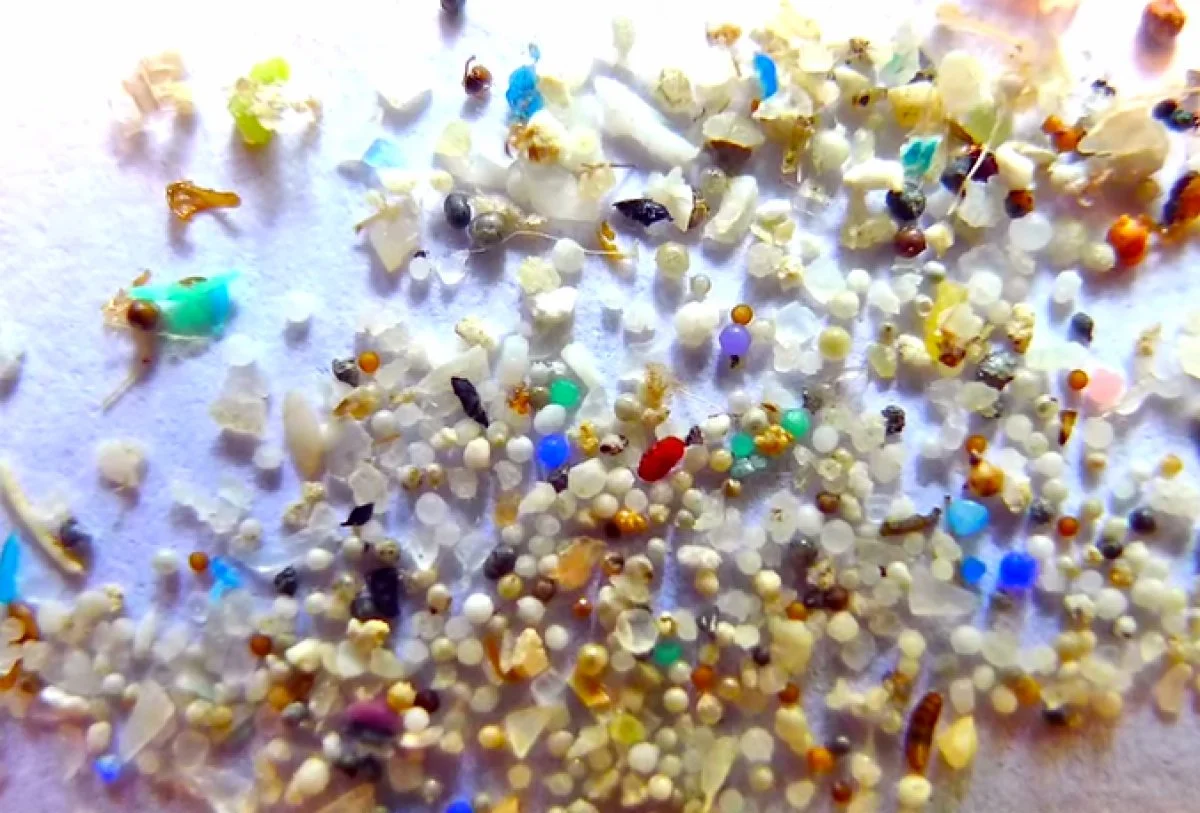
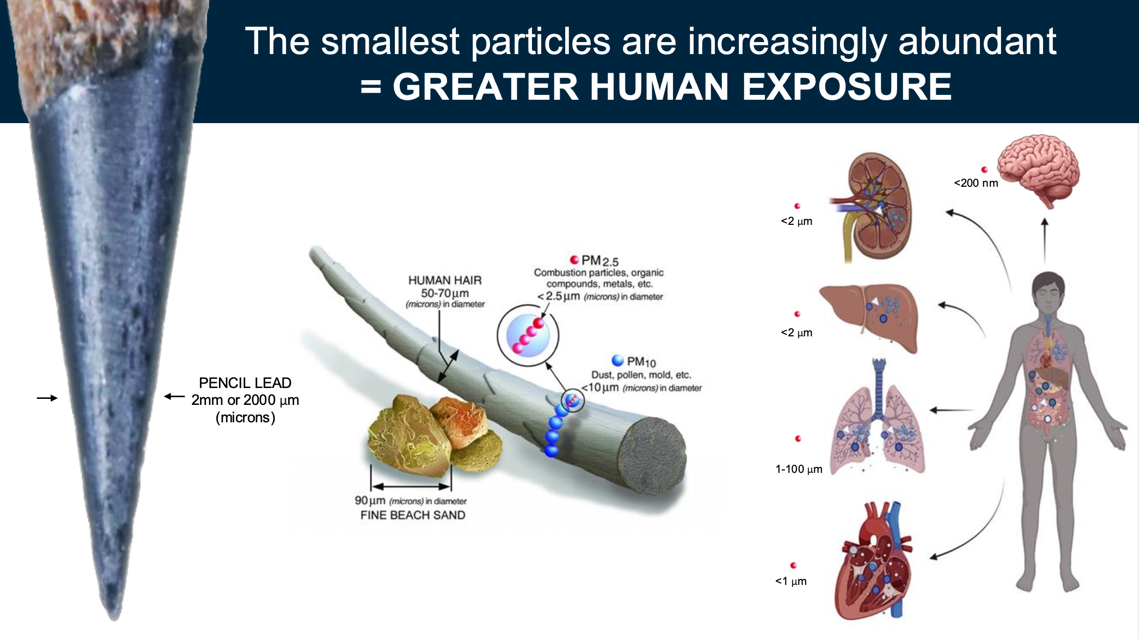
Plastic fragmenting into microplastics (1-5 μm) and nanoplastics (<1 μm) is one of the many sources of micro and nanoplastics in our environment. This rapid fragmentation is making nanoplastics ubiquitous, thus increasing human exposure. Smaller than 1/100th the width of a human hair, these micro and nanoplastics can enter the human body through ingestion, inhalation, and even wiggle through the pores of your skin. Studies reveal that the smallest nanoplastics, in the sub-micron size class, are becoming common contaminants in human tissues and organs. These exposures are well documented, but identifying their impacts takes longer. While the science is still developing, what we have thus far is alarming.”
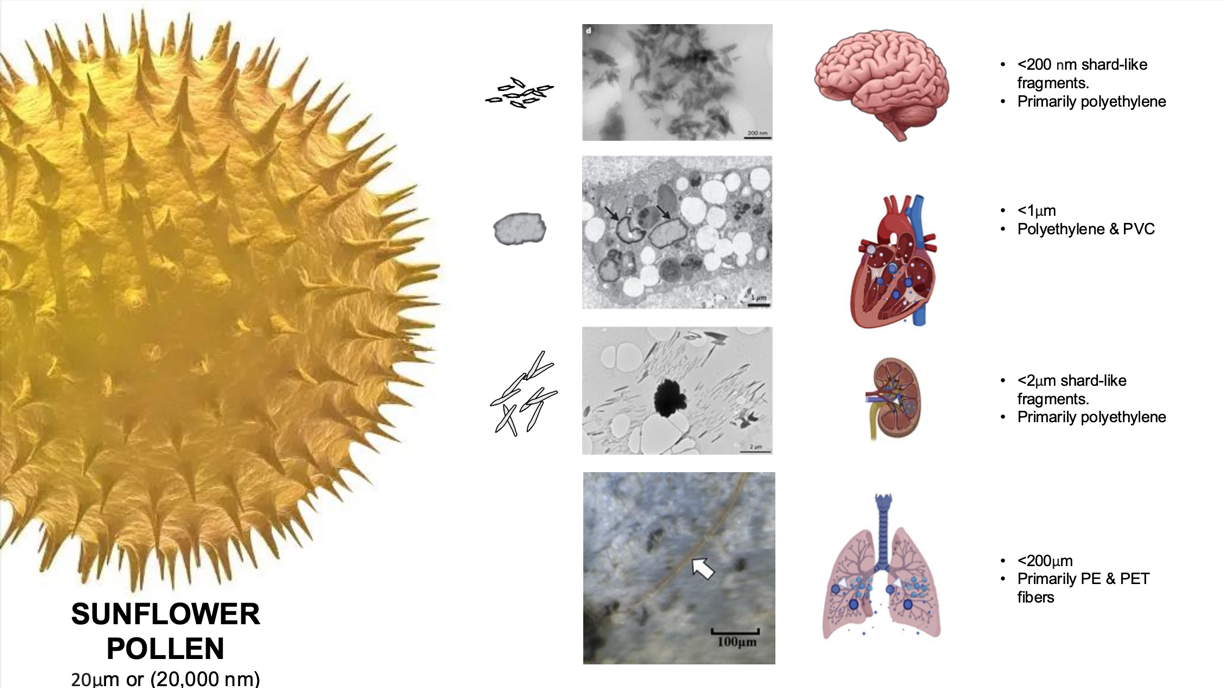
One of the other experts on the panel, Dr. Matthew Campen detailed how his research has confirmed the presence of nanoplastics, primarily polyethylene, down to 200 nanometers in size, in human brain tissue, kidney, and liver. Using tissue from 90 human cadavers from 2016 to 2024, his team found a greater accumulation of nanoplastics over time and a shocking discovery: patients who had died of dementia had roughly 10 times more nanoplastics in their brain.
This is an important moment for the Administration to translate public concern into science-driven solutions that safeguard both human and environmental health. The initiatives by HHS and the EPA represent a much-needed investment in research on two fronts:
Adding microplastics (MNPs) to the EPA’s Sixth Contaminant Candidate List (CCL 6): The EPA will list both microplastics and pharmaceuticals as specific contaminant groups in water. The CCL is the first step in the Safe Drinking Water Act regulatory process and helps drive funding and research to better understand the potential risks of these contaminants.
STOMP (Systematic Targeting Of MicroPlastics): The HHS division Advanced Research Projects Agency for Health (ARPA-H) will launch a 5-year research program with three objectives: improve measurement of nanoscale particles in the human body, understand their impacts throughout the human body, and develop methods for their removal from human tissues and organs.
However, we must also acknowledge what’s missing. The upstream mitigations to combat problematic plastic products and associated chemical additives are not addressed by these two commitments from HHS or the EPA. Ultimately, the EPA has an opportunity to add microplastics to the Unregulated Contaminant Monitoring Rule (UCMR 6), which would mandate monitoring in drinking water systems and help to protect U.S. Americans from microplastic pollution. Further, independent research is important for a commitment of this size. In a time where we already know so much about plastics and human health, $144 million in research funding for detection and removal is not enough. What we need is prevention at the source.
As a 15 year old science-focused organization, with years of advocacy on this issue, 5 Gyres recognizes the significance of this announcement. Less than a decade ago the word “pollution” was rejected by the industries that make plastic. Now, the nation’s leaders are committing early stage steps to understand and address microplastic pollution. There is still plenty of work to be done to prevent harm before it occurs. Yet, this is a perfect moment to reflect on how far the plastic pollution free movement has come.
WE NEED BOLD ACTION ON MICROPLASTICS TO SAFEGUARD PUBLIC HEALTH BEFORE THE DAMAGE BECOMES IRREVERSIBLE. JOIN US IN CONTACTING YOUR ELECTED OFFICIALS AND DEMANDING A #MICROPLASTICFREEUS NOW.

References:
(1) Eriksen, M., Cowger, W., Erdle, L.M., Coffin, S., Villarrubia‑Gómez, P., Moore, C.J., Carpenter, E.J., Day, R.H., Thiel, M. & Wilcox, C., et al. (2023). A growing plastic smog, now estimated to be over 170 trillion plastic particles afloat in the world’s oceans—Urgent solutions required. PLOS ONE, 18(3), e0281596.
(2) Evangelou, I., Bucci, S. & Stohl, A. (2026). Atmospheric microplastic emissions from land and ocean. Nature, 649(8099), 1186–1189. DOI: 10.1038/s41586‑025‑09998‑6.
(3) Nihart, A.J., Garcia, M., West, A.B., Campen, M.J., Bleske, B., Scott, J., Gonzalez‑Estrella, J., Gross, J.M., Spilde, M. & Adolphi, N.L., et al. (2025). Bioaccumulation of microplastics in decedent human brains. Nature Medicine, 31(4), 1114–1119. DOI: 10.1038/s41591‑024‑03453‑1.